Reviewing the Minimal World Map Line Art Embroidery Design
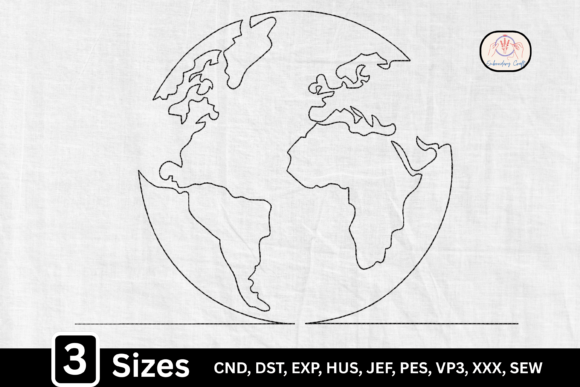
As a professional embroidery designer, my first reaction to the Minimal World Map Line Art Earth Globe was a sense of calm. This design isn’t shouting for attention; it’s quietly elegant. The single-line aesthetic creates a modern, almost sketch-like feel that’s distinctly different from the typical bold, filled-in map designs. Its stitching personality leans towards decorative and thoughtful, rather than geographically precise. It immediately suggested projects where meaning and subtlety are more important than detail—a perfect fit for gifts, personal keepsakes, or minimalist brand merchandise.
Where This Design Finds Its Natural Home
In practical terms, the Minimal World Map Line Art Earth Globe feels destined for projects where its clean lines can shine without competition. On a tote bag or apron, it becomes a sophisticated statement. Applied to a baby blanket or nursery pillow cover, it introduces a gentle, worldly theme without overwhelming the fabric. For a custom sweatshirt or cap, it offers that modern, meaningful touch many buyers seek—it’s more than just a graphic; it’s a concept. This makes it incredibly strong for Etsy listings, craft fair products, or boutique items where storytelling adds value.
Its style also lends itself beautifully to product photography and printable mockups. The simple lines create a clear, recognizable image even in small thumbnail photos, which is crucial for online sales. For brand consistency, if your shop’s vibe is modern, clean, or travel-inspired, this embroidery file could serve as a versatile, repeatable design asset.
Practical Performance on Real Fabrics and Products
When considering this for a real customer order, the primary question is how those fine lines will translate into stitches. On textured fabric like a kitchen towel, a good stabilizer will be essential to keep the running stitches smooth and prevent distortion. On stretchy fabric for a sweatshirt, you’ll need to be extra vigilant with your stabilization to maintain the globe’s circular shape.
For dark fabrics, thread color contrast is paramount. A bright white or a metallic thread could make this design pop beautifully, while a low-contrast color might lose its impact. On curved surfaces like caps, the continuous line should adapt well, but I would strongly advise testing on a scrap cap fabric first to check for any awkward breaks in the line art.
One of the biggest advantages here is likely stitch density. Unlike a dense fill stitch design, this minimal approach should result in lighter stitching, making it suitable for finer fabrics like those used for baby items or lightweight pillow covers. It also promises quicker stitch-out times, which is a practical benefit for commercial embroidery or producing multiple handmade gifts.
Critical Considerations for Small Details and Hooping
Given its line art nature, the design’s success hinges on the execution of its smallest details. Before running a final product, I would always:
- Test on scrap fabric identical to my project fabric.
- Inspect the stitched sample closely for any skipped stitches or shaky lines.
- Confirm the effective hoop size needed. While the design itself might be small, you must ensure your machine can embroider the continuous line cleanly in your chosen hoop.
- Compare light and dark fabric mockups digitally, if possible, to choose the most impactful thread colors.
Since the product category is listed as School and the type is Embroidery, it’s worth noting this design could resonate deeply in educational contexts—for teacher gifts, graduation presents, or school club apparel. That thematic connection adds another layer of giftability and customer engagement.
Affecting Product Value and Customer Trust
Using a design like this on a handmade product elevates its presentation. It moves away from generic, clip-art style embroidery toward a curated, artistic choice. For your buyer, that signals care and intention, building buyer trust. An elegantly embroidered map on a tote bag or apron feels more premium than a bulky, cartoonish design.
However, the clean presentation depends entirely on a clean stitch-out. Any wobbles in the line or inconsistent stitching will be glaring because of the simplicity. This design demands precision from you, the maker. When done well, it creates a high-value look that can justify a higher price point, especially for personalized gifts or custom apparel.
For items that need frequent washing, like kitchen towels or baby blankets, the lighter stitch load should be more durable and less prone to puckering over time compared to dense fill stitch designs. This is a practical benefit for both you and your customer.
Final Advice Before You Use This Design
The Minimal World Map Line Art Earth Globe from Creative Fabrica is a compelling design with clear commercial and handmade appeal. Its mood is contemporary and meaningful, fitting a wide range of projects from embroidered patches to sweatshirt embroidery.
My professional recommendation is to approach it with a focus on preparation. Here is a practical checklist before committing it to a real project:
- Check the product details page thoroughly. Confirm the specific file formats, any included hoop size recommendations, stitch count if provided, and the precise licensing terms for commercial use. Never assume.
- Plan your thread colors strategically for maximum contrast against your background fabric.
- Select the correct stabilizer for your fabric type—this will make or break the final look.
- Consider creating a small batch of samples (e.g., on tote bags, pillow covers) to gauge customer interest before a large production run.
This machine embroidery design has the potential to become a staple in your portfolio if your brand aligns with its aesthetic. It’s not a design for every project, but for the right project—a minimalist gift, a travel-themed product, a subtle statement on apparel—it can be exactly what elevates your work from ordinary to thoughtfully crafted.